From Static Billboard to Moving Screen — How Outdoor Advertising Evolved and Why Road Reach Became Essential
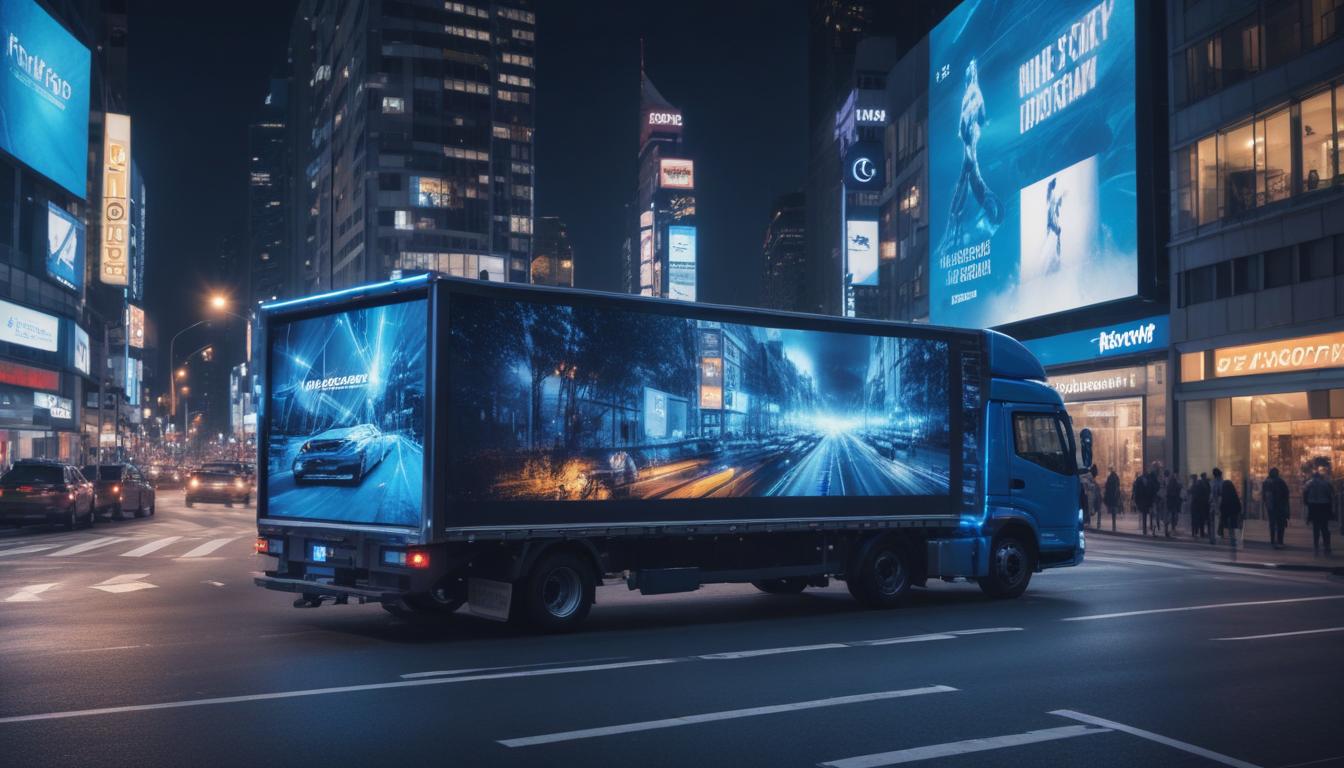
For a century, outdoor advertising meant one thing: a fixed billboard in a fixed place, waiting for the audience to pass by. It worked, but it was rigid. You paid for a location and hoped the right people drove past it. Today that model has been rewritten. The billboard no longer waits for the audience — it drives to them. This is the shift from static outdoor media to the mobile LED screen, and it has redrawn the map of what advertising campaigns can achieve.
The Limits of the Traditional Billboard
A classic billboard has real strengths: scale, prestige, and constant presence. But its weaknesses are structural. It is locked to one spot, so it can only reach whoever happens to be there. It cannot follow an event, a launch, or a shifting crowd. And its impact is almost impossible to measure precisely — you buy an estimate of traffic, not a verified path.
For decades brands accepted these limits because there was no alternative. Now there is.
The Rise of the Mobile LED Screen
The mobile LED screen takes the power of outdoor advertising and adds movement, motion, and control. A high-brightness digital display mounted on a vehicle carries your campaign directly into the busiest streets, event zones, and premium neighborhoods — and changes route on demand.
Full-motion video replaces the static poster. A brand can run a cinematic ad, switch creative by time of day, and appear exactly where its audience actually gathers. Outdoor advertising stops being a passive placement and becomes an active, directable campaign.
Why This Shift Changed the Market
Movement solves the billboard's oldest problem: waste. Instead of paying for one location and hoping, advertisers can concentrate impressions where and when they matter — outside a mall on a weekend, along the North Coast in summer, or around a stadium on match day.
It also unlocks something traditional outdoor never had: accountability. With live GPS tracking and live streaming, a brand can see exactly where its advertising went and prove the route. That combination of reach and evidence is why budgets are shifting toward mobile digital out-of-home.
How Road Reach Became Essential
Road Reach by Blue Agency was built for this new reality. It is a mobile LED billboard on a vehicle that drives your brand through the streets that matter, with live GPS tracking and live streaming so you can follow the campaign in real time.
This is why Road Reach has become a magnet for new clients and for the agencies that manage global brands. International brands demand proof, flexibility, and premium presentation — and a directable, trackable, full-motion screen delivers all three. Where a fixed billboard offers a guess, Road Reach offers a route, a schedule, and a record.
Outdoor and Digital, Working Together
The smartest advertising campaigns no longer choose between outdoor and digital — they fuse them. A mobile LED screen creates a real-world spectacle; social media and digital marketing amplify it, capturing the moment and retargeting the audience online. The street event feeds the digital funnel, and the funnel extends the street event.
The Blue Agency Approach
Blue Agency treats outdoor as one layer of an integrated system — branding, media production, ad campaigns, and Road Reach working together. We design the creative for motion, plan the routes around real audience behavior, and connect the street presence to measurable digital follow-up. The result is outdoor advertising that finally behaves like performance marketing.
Frequently Asked Questions
What is the difference between a billboard and Road Reach? A billboard is fixed and waits for traffic; Road Reach is a mobile LED screen that drives to your audience, with live GPS tracking and full-motion video.
Can mobile LED advertising be measured? Yes. Live GPS tracking and live streaming provide a verifiable record of where the campaign traveled — something static billboards cannot offer.
Why do global brand agencies prefer mobile screens? Because they need flexibility, premium presentation, and proof of delivery. A directable, trackable screen meets the standards international clients expect.